

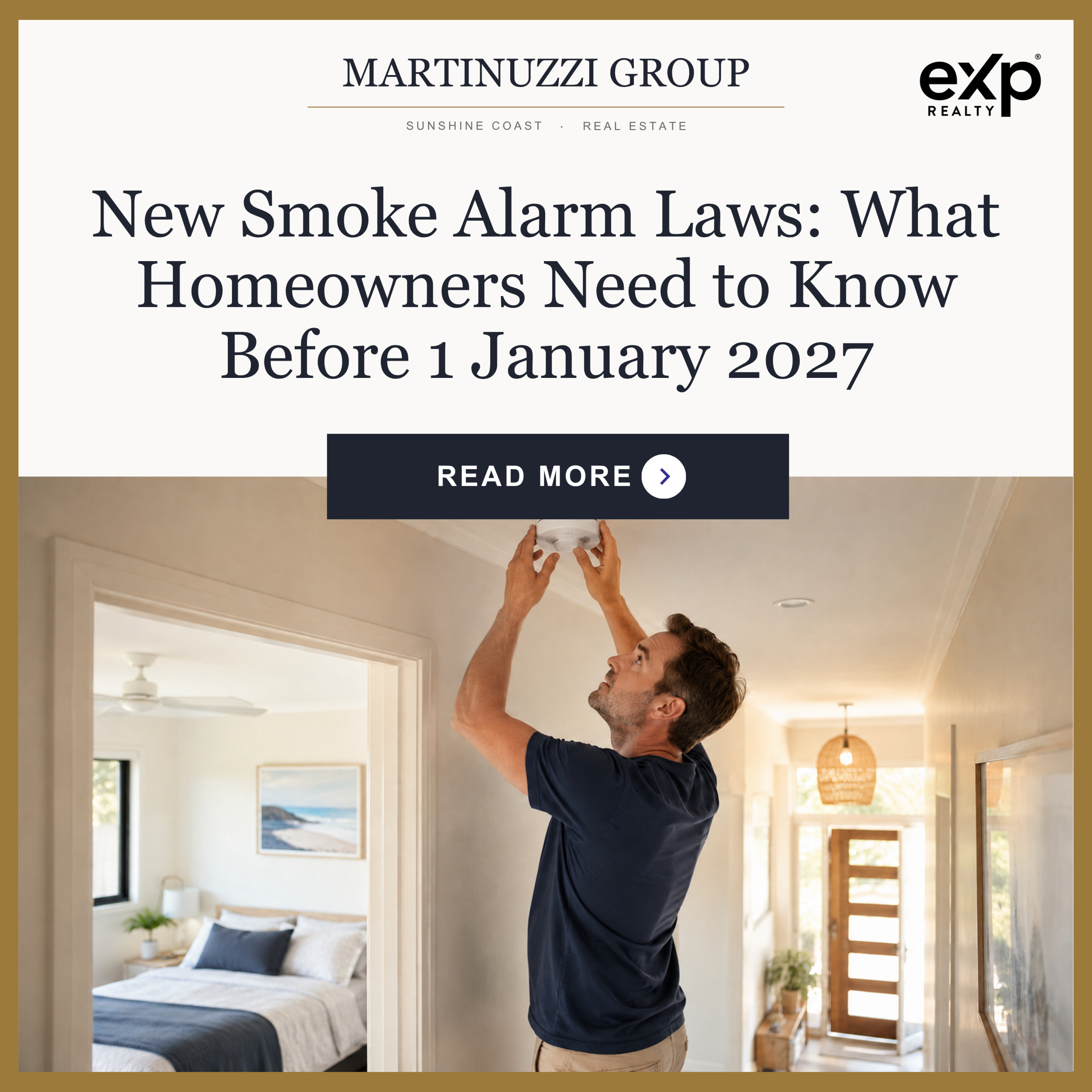
New Smoke Alarm Laws: What Homeowners Need to Know Before 1 January 2027
By Leigh Martinuzzi of Martinuzzi Group – eXp Realty | Sunshine Coast Real Estate
From 1 January 2027, every home in Queensland will need interconnected, photoelectric smoke alarms, and that includes yours.
Queensland has been rolling out these rules gradually since 2017. Rental properties and homes going up for sale already had to comply. Now the final stage arrives, and for the first time, it reaches every home in the state, including the one you’ve lived in and loved for years.
So whether you’re settled in Buderim, raising a family in Palmwoods, or tucked away in the Mooloolah Valley hinterland, this one’s for you. Owning and living in your own home is really all it takes to be covered by the new rules.
1. How we got here
It goes back to a house fire in Slacks Creek in 2011. It’s one of the deadliest residential fires in Queensland’s history, and it claimed eleven lives.
The inquiry that followed pointed to smoke alarms as a critical factor. Working, well placed alarms could have made a real difference. That finding set off a decade long overhaul of the rules, because officials wanted to prevent another tragedy like it. The government chose to introduce the changes in stages, rather than all at once.
New builds and homes undergoing major renovation had to comply from 2017. The same applied to rental properties and homes going up for sale from 2022. So if you’ve bought or sold on the Sunshine Coast recently, your alarms are likely already up to standard.
Now it’s the final group’s turn. Owner occupiers who haven’t sold, rented, or renovated since the rules changed have until 1 January 2027 to catch up. No extensions are currently on the table.
2. What compliant alarms actually look like
The standard itself isn’t complicated, even if getting there takes a bit of organising. In practice, under the current rules, alarms need to be:
- – Photoelectric, not the older ionisation type. Ionisation alarms use a small radioactive source to detect smoke, and Queensland no longer accepts them.
- – Fitted in every bedroom.
- – Fitted in every hallway that links bedrooms to the rest of the home.
- – Present on every storey, even where there are no bedrooms. In that case, fit at least one alarm somewhere along your natural path out of the house.
- – Interconnected. If one picks up smoke, every alarm in the home should sound together, not just the one nearest the fire.
There are two ways to get there. A licensed electrician can hardwire alarms into the mains, with a battery back up. Or, for a simpler job, you can buy sealed ten year battery photoelectric alarms and fit them yourself. No licence required. However, that second, simpler option means this doesn’t have to be an expensive job for everyone.
If your current alarms are the kind that beep at 3am over a flat battery, take note. Or if you’re simply not sure how old they are, take one down and check underneath for the AS3786-2014 stamp.
3. Why it’s worth sorting sooner rather than later
You’re far from the only one who hasn’t got to this yet. Industry estimates suggest seventy to eighty per cent of owner occupied homes across Queensland aren’t yet compliant. In fact, that works out to well over a million properties still needing work.
Electricians are already warning that bookings and stock could tighten as the deadline nears. This happened before, in the run up to the 2022 rental deadline. So getting in early, say a quiet week this spring, beats competing for a tradie’s time in December 2026.
Meanwhile, cost is worth knowing upfront. As a rough guide, a professional job on a standard four bedroom home tends to cost between $800 and $1,000. The self install battery option usually costs less for smaller jobs.
There’s an insurance angle as well. Most home policies expect you to keep your property reasonably safe. If you ever need to make a fire related claim, insurers may look at whether your alarms were compliant. Still, that’s reason enough on its own to sort this out, separate from the legal deadline.
4. What this means if you’re selling your home
Plenty of sellers don’t think about this until they’re mid transaction. Often it only comes up when a conveyancer asks for proof they’ve done it. Worth knowing: compliant smoke alarms have been a legal requirement since 31 December 2021. This applies if you sign a sale contract after that date. Besides, sellers must declare this to the buyer as part of the transfer.
So sorting this now isn’t only about beating a future deadline. It also means one less thing to organise if your own plans ever change.
The same logic applies if you’re in a manufactured home or land lease community. New rules took effect in December 2025. If you’re selling, or passing on a site agreement, you’ll need written confirmation of your smoke alarm compliance. It’s also worth having that ready well before it becomes part of the paperwork.
Maybe you’re staying in your Sunshine Coast home for the long haul. Or maybe this has you thinking about what’s next. Either way, a little proactive care now goes a long way. If the second one sounds like you, we’re always happy to have a chat about your next move.
Get in touch with us today and and let’s give you fantastic results that you deserve.
SUBSCRIBE to stay up to date with all the latest property insights and news.
Click Here to Subscribe
The Sunshine Coast Seller’s Guide to Choosing the Right Agent
Get Your Free Guide Here
Just Listed Your Home? Here’s What Happens Next (And How to Get Ready for a Great Result)
Download the Guide Here