

Supply Is Tight, But That’s Not the Whole Story
By Leigh Martinuzzi | Martinuzzi Property Group – eXp Australia
On the surface, the national market is still showing resilience, with recent data pointing to continued price growth across much of the country. But when you look beneath the headline numbers, the story is much more nuanced.
What stands out to me is that we’re no longer in a market where one broad national trend explains everything. Conditions are becoming more fragmented. Some cities are still pushing ahead strongly, others are flattening out, and in many areas the biggest difference now comes down to price point, affordability, and the type of stock available.
That matters here on the Sunshine Coast too, because while we’re influenced by national trends, our local market still moves to its own rhythm.
National Growth Continues, But Momentum Is Becoming More Selective
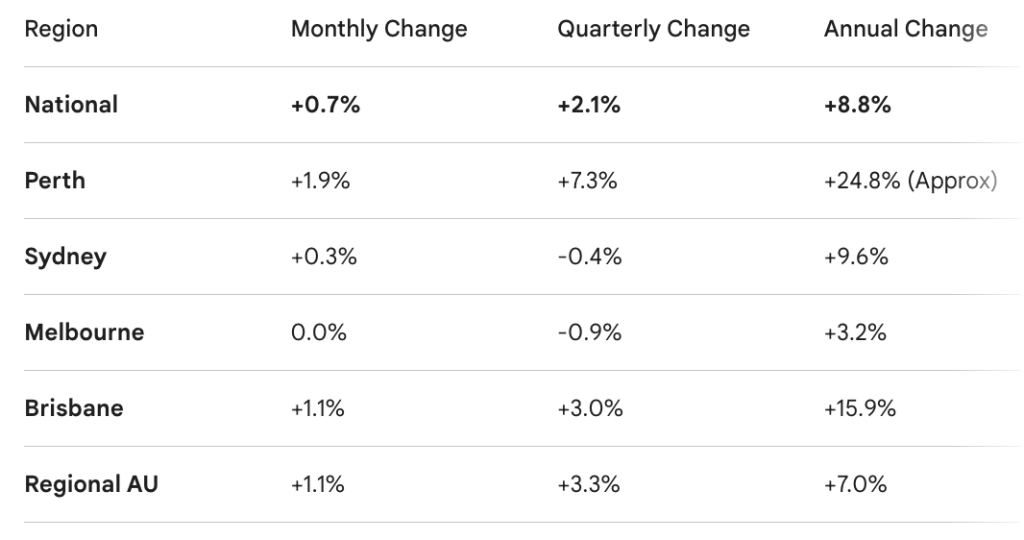
The latest housing figures still point to price growth nationally, although the pace no longer looks as strong or as broad-based as it did earlier in the cycle. According to recent CoreLogic reporting referenced by Tim Lawless, dwelling values lifted again over the month and quarter, extending the current growth pattern. Brisbane remained one of the stronger capital city performers, while Sydney and Melbourne showed softer conditions. To me, that says the market is still moving forward, but not evenly.
Recent commentary from Dr Andrew Wilson reaches a similar conclusion. Despite rate pressure and ongoing affordability challenges, housing conditions have held up better than many expected. In my view, that resilience says a lot about how little quality stock is available in the locations buyers actually want to be.
Bank Forecasts Are Still Shaping Sentiment
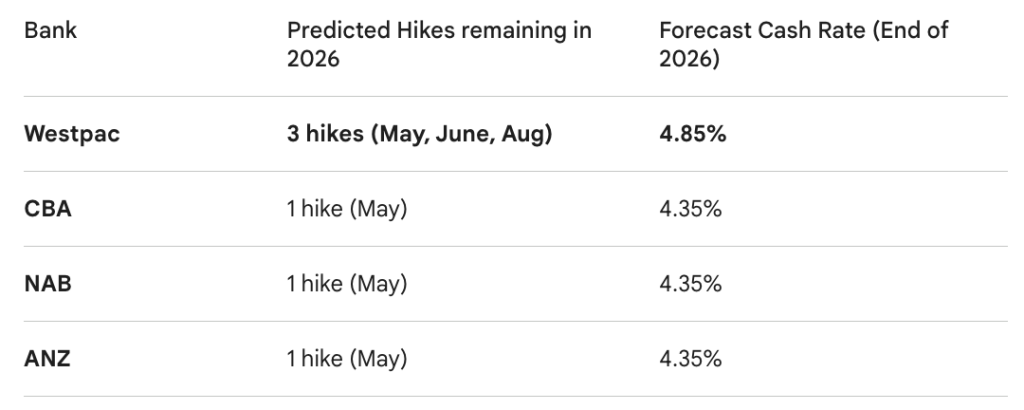
Westpac’s current view is that the RBA may still have three more increases ahead, which would lift the cash rate to 4.85%, a level Australia hasn’t seen since late 2008. The key point here is that Westpac is currently the outlier among the major banks, holding a much more aggressive view than its competitors.
That sort of forecast matters, even before anything actually changes. It shapes sentiment. Buyers become more cautious, sellers pay closer attention to pricing strategy, and borrowers keep a closer eye on affordability and repayment pressure.
Why Supply Is Only Part of the Story
But I also think it’s too simple to say this is only a supply story.
Yes, low listings are clearly supporting prices in many parts of the country, especially in Brisbane and regional markets. We’re seeing that in buyer behaviour as well. When a well-presented property comes to market in a desirable area and is priced correctly, there is still genuine competition. But finance, confidence, and borrowing power are also playing a major role in how buyers respond.
That’s where the interest rate conversation remains important. Even when rates don’t move immediately, expectations around future rate changes can affect sentiment straight away. Borrowers are more cautious, upgraders are doing the maths more carefully, and many households are still feeling the cumulative effect of higher repayments. So while demand is still present, it is more selective than it was during the earlier stages of the upswing.
Affordability Is Reshaping Buyer Behaviour
Another point worth noting is that affordability pressures are now creating a split within the market itself. In some areas, more affordable stock is holding demand much better than premium property. Recent commentary suggests lower-priced segments are often proving more resilient because buyers are being pushed toward price brackets that still feel manageable.
That trend makes sense locally as well. Entry-level homes, investment-grade properties, and well-located units continue to attract attention, while homes that stretch beyond buyer comfort on price can take longer to gain traction.
A Market Performing Differently City to City
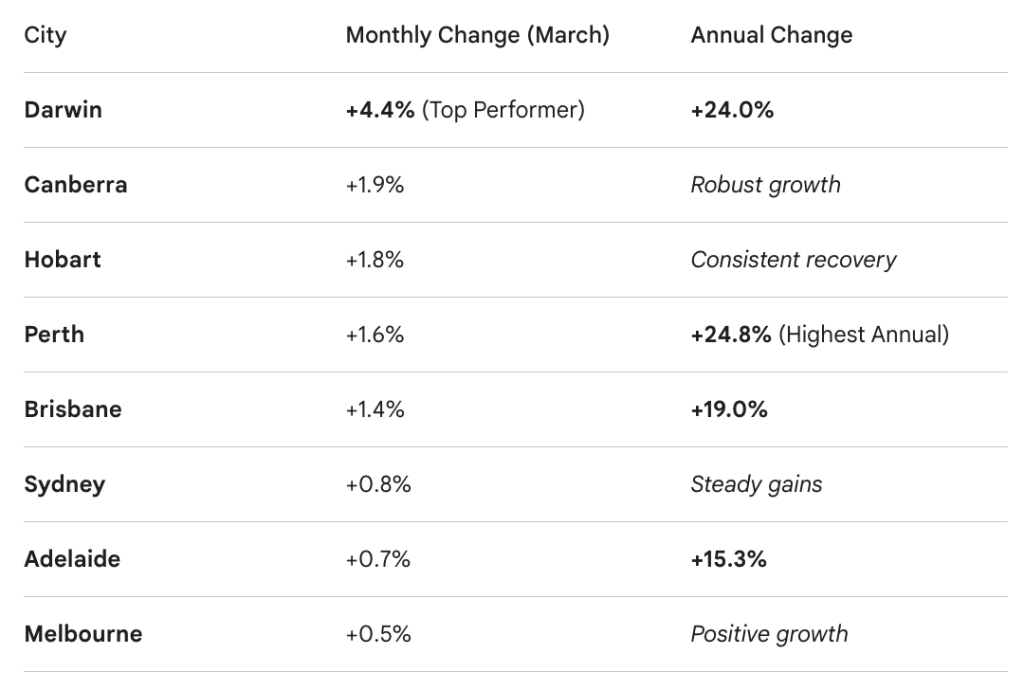
Another important takeaway from the latest reporting is just how differently each city is performing. Markets like Perth and Brisbane have continued to post strong gains, while other capitals are seeing much steadier conditions. That reinforces the idea that this is no longer one national market moving in lockstep. It is a series of sub-markets, each reacting differently to affordability, supply, confidence and local demand drivers.
For Sunshine Coast readers, Brisbane’s strength is especially relevant. It continues to shape confidence across South East Queensland, and it also reinforces why lifestyle markets with limited quality stock are still attracting attention.
The Bigger Housing Debate: Not Just More Homes, But Better-Matched Homes
There’s also an interesting debate emerging around the idea of housing undersupply. A number of analysts still point to low stock levels as the key driver of price growth, and there is truth in that, particularly when we talk about homes actually available for sale right now. But other commentators have argued that the issue is more complex than a simple shortage of dwellings. In other words, it’s not just about how many homes exist, but what type of homes they are, where they’re located, and how easily buyers can finance them.
Michael Matusik raises an important point here. His argument is that the issue is not simply housing volume, but whether the market is delivering the right kind of homes in the right locations. With one- and two-person households now making up a large share of the population, there’s an obvious disconnect between modern household needs and a lot of the product still being delivered. We still build too much of one product type at the fringe, while not enough smaller, attainable housing is being delivered in established areas where people want to live, work, and stay connected.
That’s a conversation I think the Sunshine Coast needs to pay close attention to.
What I’m Seeing on the Sunshine Coast
Locally, demand remains strongest for homes that offer lifestyle, convenience, and relative value. Buyers still want quality, but they’re also far more conscious of budget, holding costs, and long-term liveability. We’re seeing continued interest in well-positioned homes close to beaches, village centres, schools, and lifestyle amenities, but the strongest response is often for properties that feel realistic and well-aligned with today’s financial environment.
This is especially relevant for sellers. The market is still good, but buyers are sharper. They’re comparing more, negotiating harder, and quickly passing over anything that feels overpriced. Presentation, strategy, and pricing discipline matter more now than they did when momentum alone was doing a lot of the heavy lifting.
I expect well-located, well-presented homes to continue performing solidly, especially in tightly held pockets where supply remains limited. I also think we’ll keep seeing a divide between properties that are aligned with current affordability settings and those that are testing the upper end of buyer confidence.
What It Means for Buyers, Sellers, and Investors
For buyers, the current market still offers opportunity, but patience and preparation are key. Finance should be sorted early, expectations need to be realistic, and the focus should be on long-term fit rather than chasing a perfect headline.
For investors, the fundamentals remain worth watching closely. Tight rental conditions, constrained supply in desirable lifestyle markets, and ongoing population pressure continue to support well-chosen assets. But it’s becoming increasingly important to buy based on local scarcity, liveability, and future owner-occupier appeal rather than broad market hype.
For sellers, the opportunity is still there, but the approach matters. Homes that are well presented, priced in line with buyer expectations, and marketed strategically are still generating strong engagement. The gap between listed and sold well is increasingly about execution.
The bigger picture is this: the market is still moving, but it’s not moving blindly. Buyers are active, but calculated. Sellers can still do very well, but only with the right strategy. And while low stock remains an important part of the story, it’s borrowing power, sentiment, and housing suitability that are increasingly shaping what happens next.
At Martinuzzi Property Group, we’re here to deliver more than a sale. We guide you with radical honesty, exceptional communication, and a stress-free experience, backed by calm confidence, local expertise, and genuine care so you feel informed, supported, and in control from day one to sold.
If you’d like a clear, no pressure view of what your home could achieve in today’s market and what you can do to maximise the outcome, I’m happy to help.
Request Your Free Market Appraisal Today! 👉 Click here to book your appraisal
SUBSCRIBE to stay updated with all latest property insights and news 👉 Click Here to Subscribe
The Sunshine Coast Seller’s Guide to Choosing the Right Agent 👉 Get Your Free Guide Here
Preparing for Settlement: A Seller’s Guide to a Smooth Handover 👉 Download the Guide Here
Sources and Market Data
- https://propertyupdate.com.au/national-home-values-rose-0-7-in-march-latest-cotality-home-value-index-report/
- https://propertyupdate.com.au/westpac-predicts-3-more-rba-hikes-taking-cash-rate-to-4-85-new-data-reveals/
- https://propertyupdate.com.au/latest-my-housing-market-home-prices-update/
- https://propertyupdate.com.au/undersupply-myth-why-building-less-doesnt-push-prices-up/
- https://matusik.substack.com/p/close-to-home