


A Maturing Upswing, More Selective Buyers, and Why Quality Still Wins
By Leigh Martinuzzi | Martinuzzi Property Group – eXp Australia
This week’s Sunshine Coast property market feels a bit like standing on the beach with two weather apps open: one says “storm incoming”, the other says “sunny with a chance of a breeze.” The truth is somewhere in the middle, and it’s also different depending on where you stand and what you’re looking at.
After reading a handful of market commentaries this week and reviewing the latest Cotality figures, my view is pretty simple: Australia isn’t rolling into a uniform downturn.
We’re in a maturing upswing where momentum is easing, buyers are more selective, and outcomes are getting more uneven by suburb, price point, and property type. That’s not a bad market. It’s just a market that rewards quality and punishes laziness.
What we’re seeing now is a market shifting from “easy mode” to “strategy mode”. The last couple of years rewarded almost anything that hit the market. This next phase rewards homes with strong fundamentals, and it rewards sellers and buyers who understand the nuance.
The cycle isn’t over, it’s maturing
Michael Matusik described it well this week: we’re not staring down a uniform housing downturn, but we are seeing the cycle mature. That’s a key distinction. A maturing upswing doesn’t mean prices suddenly drop across the board. It usually looks more like this: activity cools, growth rates moderate, and the market becomes more fragmented by suburb and product type.
Higher interest rates don’t necessarily reverse the cycle. They tend to dull it. They shrink borrowing capacity, increase caution, and expose where demand is genuinely strong versus where demand was fuelled by cheap money and momentum. And if you’ve been watching the Sunshine Coast closely, you’ll know that description fits perfectly. We’ve moved from “buyers chasing everything” to “buyers choosing carefully”.
Fragmentation is the story
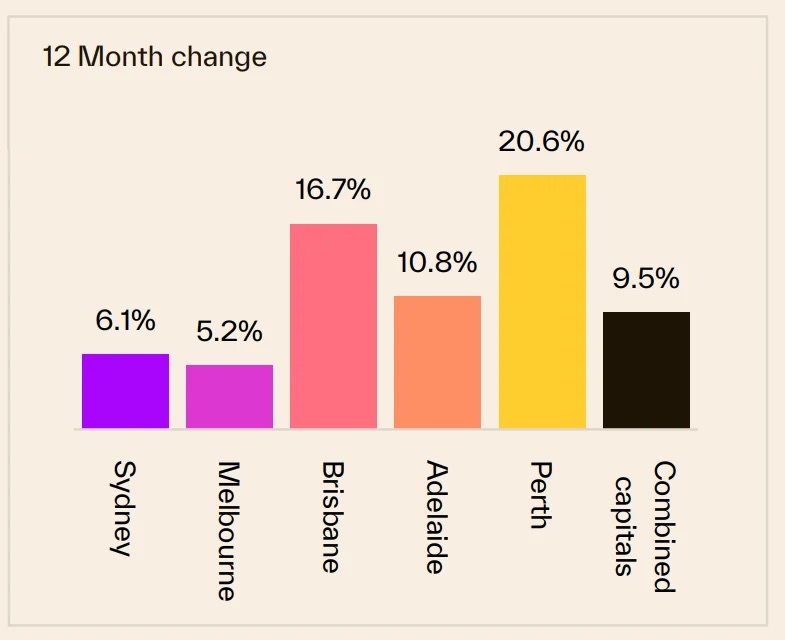
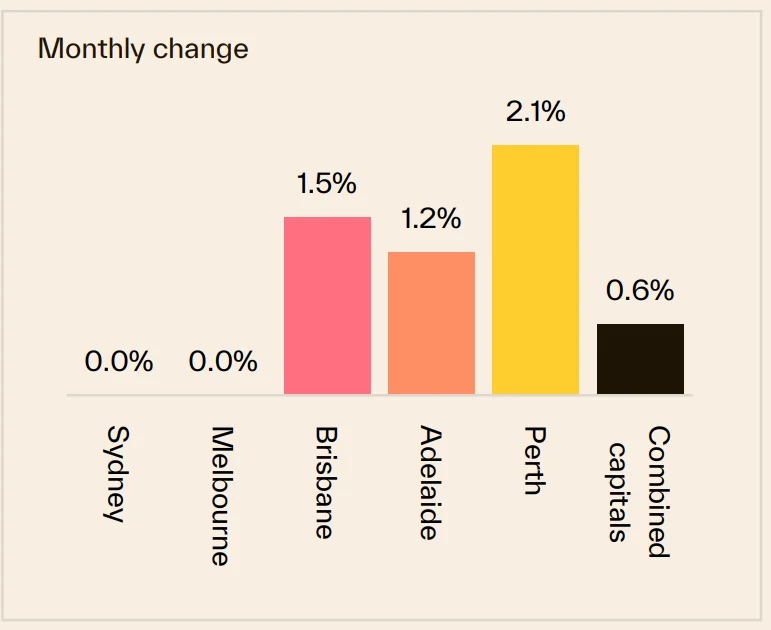
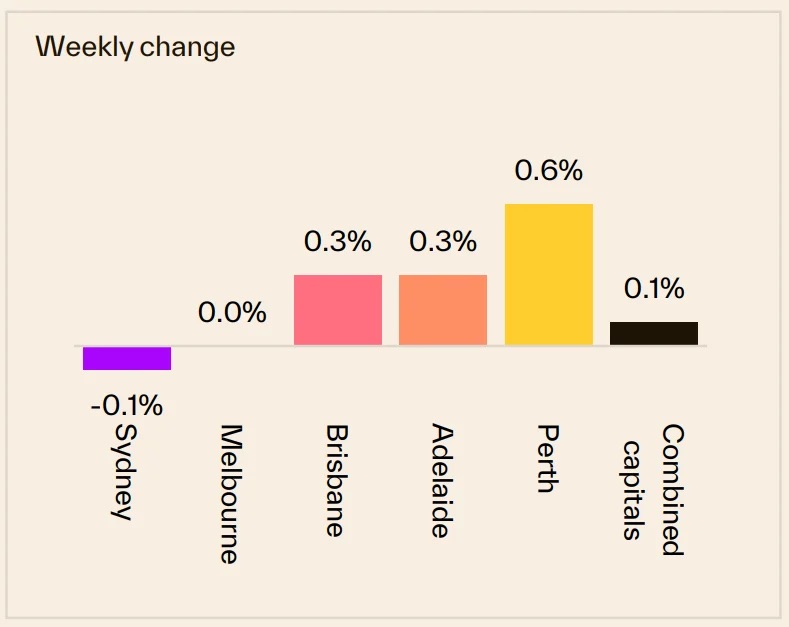
The latest data shows just how split the national market has become. Over the past 12 months, the combined capitals are up 9.5%, but the spread underneath that average is wide, from Perth (+20.6%) and Brisbane (+16.7%) to Sydney (+6.1%) and Melbourne (+5.2%). Even the short-term movements show the same story: not one market, but many, all behaving differently.
If you’re wondering why I’m mentioning capital city data in a Sunshine Coast update, it’s because our market is influenced by the same forces: affordability, migration, buyer confidence, and most importantly, supply. When the national market fragments, lifestyle markets fragment too, just in different ways.
Affordability is biting, but supply is still the anchor
Here’s the push-pull dynamic playing out locally: affordability has reduced buyer depth, but limited supply still puts a floor under values.
That combination is important. When demand softens a little but supply remains tight, prices don’t usually fall off a cliff. The market tends to hold, and the results become more uneven.
What I’m seeing on the ground reflects that. A-grade location, A-grade presentation, and realistic pricing still bring buyers out. But compromised homes, busy roads, awkward layouts, obvious maintenance, or “hope pricing”, are meeting more pushback, longer days on market, and tougher negotiation. Buyers are doing more due diligence, asking better questions, and taking their time, but they’re not disappearing.
So the message for sellers is: the market is still there, but you need to earn the result now. For buyers: there’s more room to negotiate than there was during the frenzy, but you still need to move quickly when a genuinely good property hits the market.
“How can prices keep rising when so many people feel locked out?”
This is the question I get repeatedly, and Michael Yardney made a point I think is worth repeating in plain English: prices are not set by the people who can’t buy. They’re set by the people who can.
Even if affordability is stretched for a big chunk of Australians, there’s still a significant cohort active in the market, higher-income earners and business owners, long-term investors with equity, and “right-sizers” selling a larger home and buying smaller with less, or no mortgage.
There’s also another factor that gets talked about quietly but is very real: intergenerational wealth support. Whether it’s deposit assistance, guarantees, or early inheritance, it’s boosting the ability of younger buyers to participate, especially in entry and mid-tier price brackets.
And then there’s buyer behaviour. When people can’t buy the perfect home in the perfect suburb, they don’t always leave the market. They adapt. They compromise on suburb, switch from houses to units or townhouses, or “rentvest” (rent where they want to live, invest where they can afford). That broadens demand across different segments, which helps explain why prices can stay resilient even when affordability headlines look bleak.
Buyer engagement is still there, it’s just more selective
One of the more interesting signals in this week’s numbers is that buyer engagement hasn’t disappeared. Auction volumes have lifted across the capitals and clearance rates have held around the high-60% range even as more properties are offered.
Now, auctions aren’t the Sunshine Coast’s main selling method in many pockets, but the sentiment takeaway still matters. When activity rises and results hold up, it suggests there’s still depth in the buyer pool.
To me, that means we’re not in a market where buyers are gone. We’re in a market where buyers are cautious, comparison-shopping harder, and willing to wait for the right property, but prepared to act decisively when it shows up.
What could change the Sunshine Coast next?
This isn’t about next week. It’s about the direction of travel. Australia’s housing system is slowly shifting from one standard pathway (buy, mortgage, live) to a menu: different ways to own, build, and live. Some will fizzle, but a few have real implications for the Sunshine Coast.
Backyard homes and “gentle density” is one of the big ones. If secondary dwellings continue to be encouraged, we’ll see more homeowners creating rental income on the block, space for extended family, or even a downsizing option without leaving the suburb. It’s one of the quickest ways to add supply without big developments, and it’s exactly the kind of “quiet change” that reshapes suburbs over time.
Modular and prefab construction is another. If construction remains slow and expensive, anything that reduces build time and cost volatility will gain traction. Even if it doesn’t dominate the market, it could help unlock more feasible supply where traditional builds are stuck.
Digital buying and AI-assisted selling is already happening. Buyers inspect remotely, research online, and make faster decisions when they trust what they’re seeing. Better digital presentation reduces friction for out-of-area buyers, and lifestyle markets like ours tend to benefit from that.
None of these shifts flip the market overnight, but they do influence what buyers value and how suburbs evolve.
2030 Forecast: The biggest risk isn’t timing, it’s buying the wrong asset
A final theme worth mentioning is the growing “property divide”, where some locations and property types compound strongly while others drift sideways. Whether or not any suburb doubles isn’t the point. The practical takeaway is.
The biggest risk isn’t market timing. It’s buying (or selling) the wrong property in the wrong location, or selling it with the wrong strategy. In a fragmented market, A-grade homes remain scarce and continue to attract competition. “Average” homes don’t automatically rise just because time passes. Compromises get punished harder when buyers are selective.
But if I had to sum up the Sunshine Coast right now in one line, it would be: Quality still wins, and strategy beats guesswork.
So if you’re selling, your goal isn’t “list it and hope.” Your goal is to position your home in the top tier of what’s available, because buyers compare everything now. Presentation, pricing, timing, and the quality of your marketing all matter. Now is also the time to get clear on where your property sits and what you can do to maximise the outcome before you hit the market.
At Martinuzzi Property Group, we’re here to deliver more than a sale. We guide you with radical honesty, exceptional communication, and a stress-free experience, backed by calm confidence, local expertise, and genuine care, so you feel informed, supported, and in control from day one to sold.
If you’d like a clear, no-pressure view of what your home could achieve in today’s market (and what you can do to maximise the outcome), I’m happy to help.
Request Your Free Market Appraisal Today! 👉 Click here to book your appraisal
SUBSCRIBE to stay updated with all latest property insights and news 👉 Click Here to Subscribe
The Sunshine Coast Seller’s Guide to Choosing the Right Agent 👉 Get Your Free Guide Here
Preparing for Settlement: A Seller’s Guide to a Smooth Handover 👉 Download the Guide Here