


Breaking Down Cotality’s November 2026 Housing Chart Pack
By Leigh Martinuzzi of Martinuzzi Group – eXp Realty | Sunshine Coast Real Estate
I just read Cotality’s chart pack for November, and this is one of the most sobering editions I have seen in a few years. Whether you are buying, selling or just curious about what is going on, here is my honest take on the numbers and what I think they mean for you on the Sunshine Coast.
A Fast Fall, and Bigger Than the Headline in Some Cases
Cotality’s chart of the month shows capital-city values down 8.1% in seven months. They say that is the largest fall over a comparable period in at least forty years.
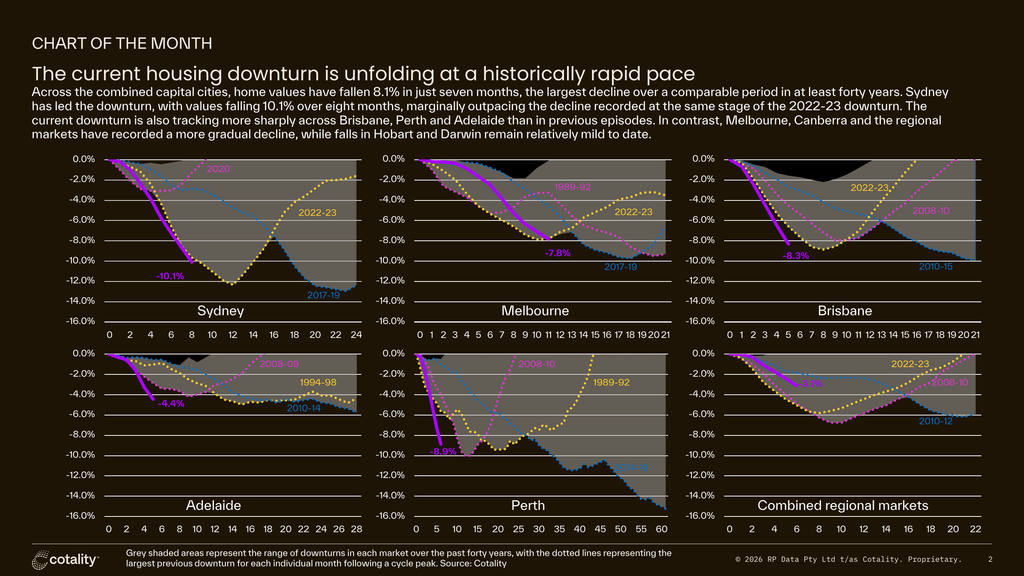
That is a significant number on its own. But averages smooth things out. In some individual sales, I am hearing of much bigger gaps, of 10% and even 20%, between what a property was first listed for and what it actually sold for. I have seen that here locally as well. Those are individual results, not the norm, but they show how much pricing has changed for some sellers this year.
Falling Prices Don’t Mean Buying Is Easier
The RBA has raised rates five times this year, taking the cash rate to 4.85% on 3 November. It has one lever to control inflation, and it is using it. In my opinion, it perhaps should not have cut rates when it did last year. If it had held, some households might not be facing the pressure they are likely to feel over the coming months.
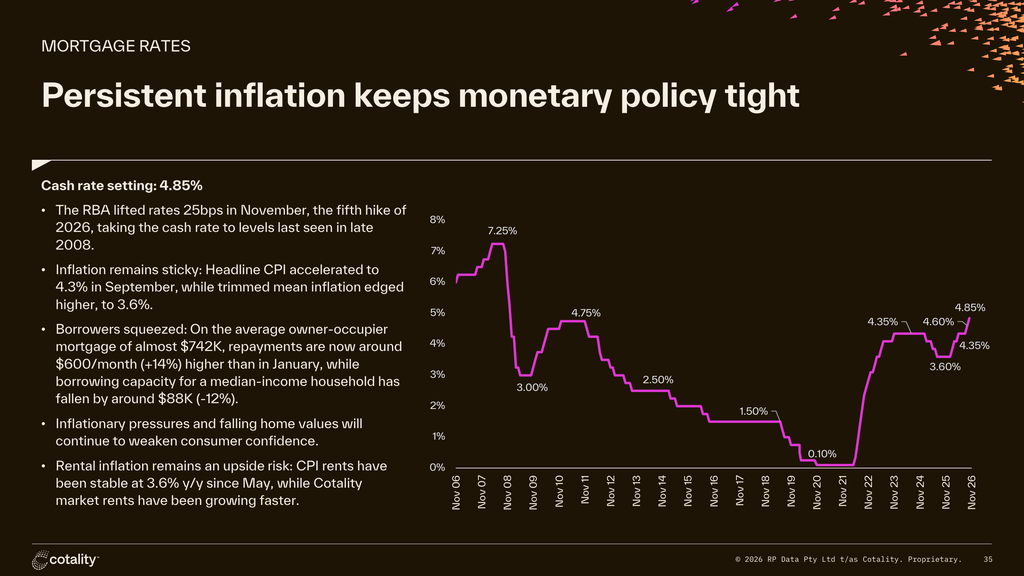
Cotality estimates that repayments on an average owner-occupier loan of almost $742,000 are now about $600 a month higher than in January. Put that on top of fuel, groceries, insurance and energy, and there is a lot less left at the end of each month. Households are feeling it, no doubt about it.
This is the part I think many people miss. You would expect lower prices to make buying more affordable. But borrowing capacity for a median-income household has fallen by around $88,000, or 12%, according to Cotality. That is a bigger drop than the fall in values. Prices would need to fall a lot further before affordability really balanced out for buyers.
Regional Queensland Is Holding Up, But It Has Shifted
Across the country, regional markets have fallen at less than half the pace of the capitals. Regional Queensland is still 3.5% higher than a year ago. Over the latest quarter, though, it fell 2.7%, the largest quarterly fall of any regional market in Australia.
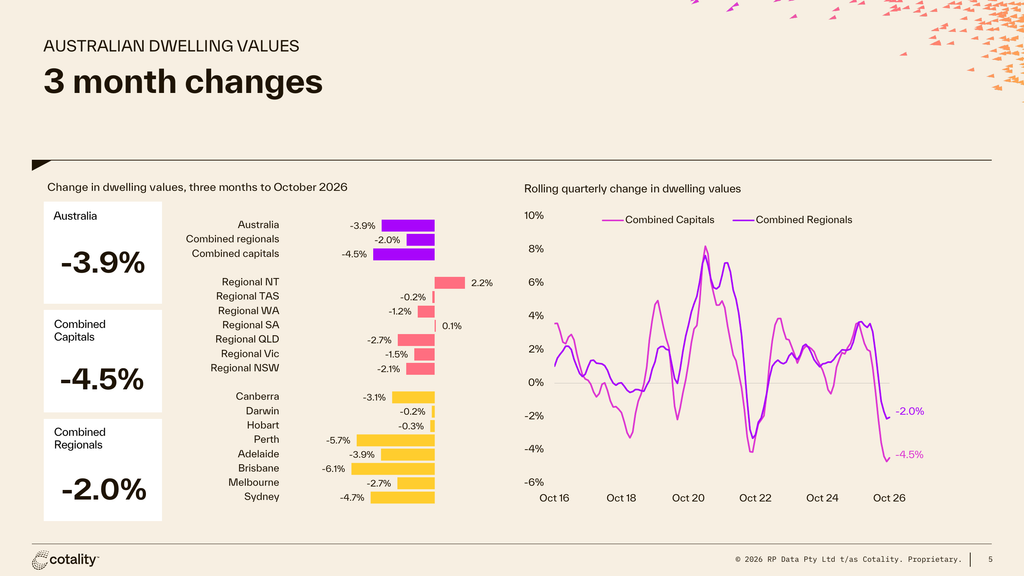
Cotality’s regional Queensland figures cover everywhere outside Greater Brisbane, including the Sunshine Coast. That is a very broad mix. Our coastal and hinterland lifestyle markets can move quite differently from inland resource or agricultural towns, so I treat these numbers as a guide to the direction of the region, not a Sunshine Coast result.
Homes Are Taking Almost Twice as Long to Sell, and Discounts Are Widening
In regional Queensland, the median time on market has gone from 22 days to 43 in a year.
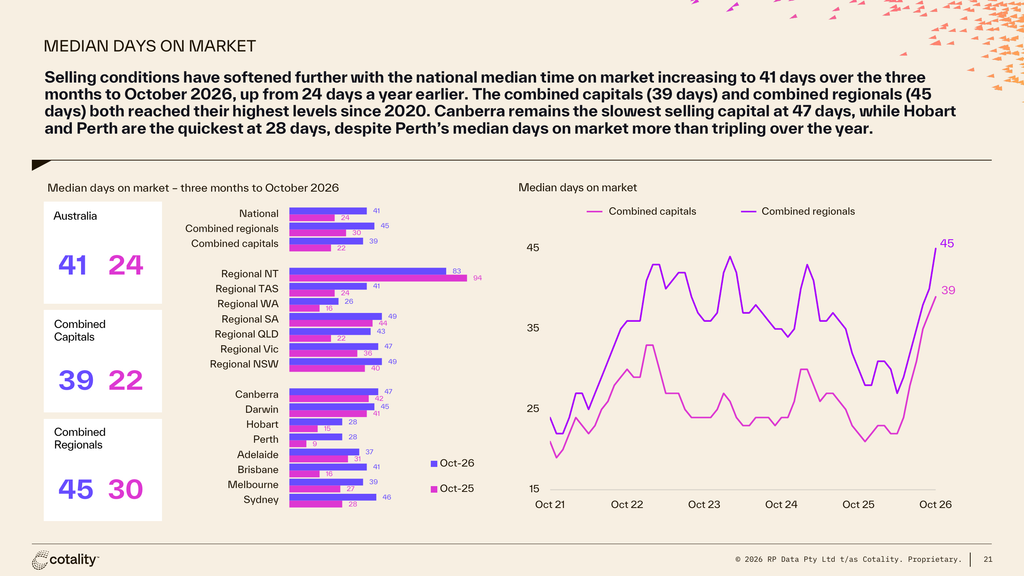
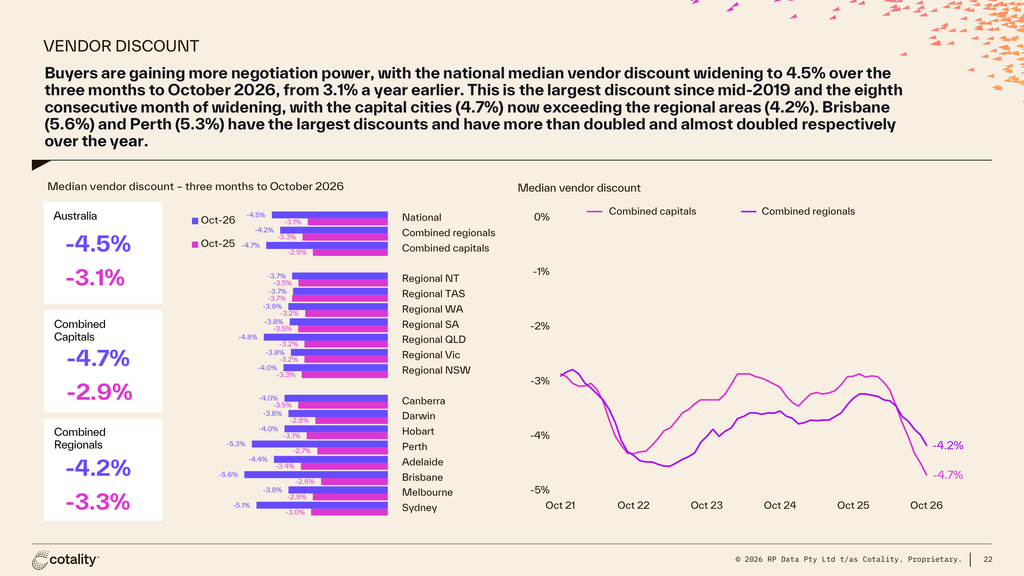
Over the same period, the median vendor discount, the gap between a home’s first asking price and what it finally sells for, has widened from 3.2% to 4.8%. That is the widest of any regional market in the country, and slightly wider than the capital city average.
Many sellers are still pricing for the market of six or twelve months ago, and then adjusting once they have been on the market for a while. That costs them time, and often money too.
Why I Don’t Think Prices Are Collapsing
Fewer homes are selling. Annual sales are down 11.2% nationally and 12.1% across regional Queensland, and over the past three months sales ran about 18% below the five-year average. Auction clearance rates across the capitals have dropped to their lowest levels since 2020.
My take is that many owners on the market right now don’t actually need to sell. They were hoping to make an upsizing or downsizing move. If they can’t get a price that makes sense to them, many will simply withdraw and wait it out. We are seeing that in auction results in Sydney, and in results here on the Sunshine Coast as well.
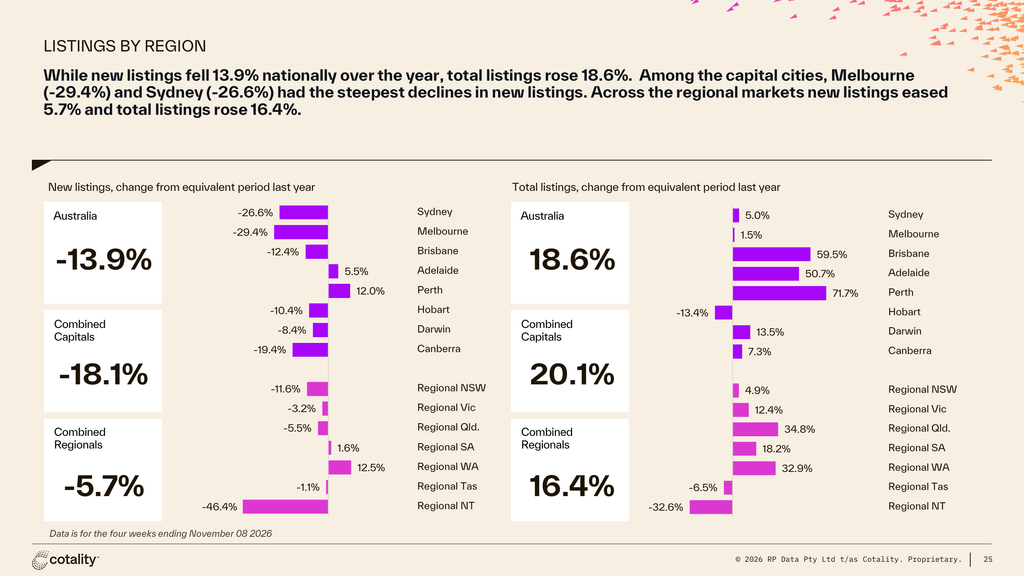
The listings data backs this up. In regional Queensland, new listings are down 5.5% on last year, while the total number of homes for sale is up 34.8%. Stock is building because homes are taking longer to sell, not because owners are rushing to get out.
I believe we will only see significantly bigger falls if more people become distressed and have to force a sale, because their timing doesn’t improve or they simply have to move now. That is when results could start coming in a lot lower than expected. Not everyone is in that position, and most owners I speak with are not.
What I Am Seeing Locally
My open homes over the past few weeks have been busy, and one property drew more than 40 buyer groups in a single weekend. So buyers are definitely out there. Their borrowing capacity has come down, but the good buyers are still active, and they are still prepared to act on the right home.
That tells me pricing strategy is everything right now. When a well-presented home is priced on current evidence, the response can be very different from the 43-day regional average.
What I Would Be Thinking About as a Homeowner
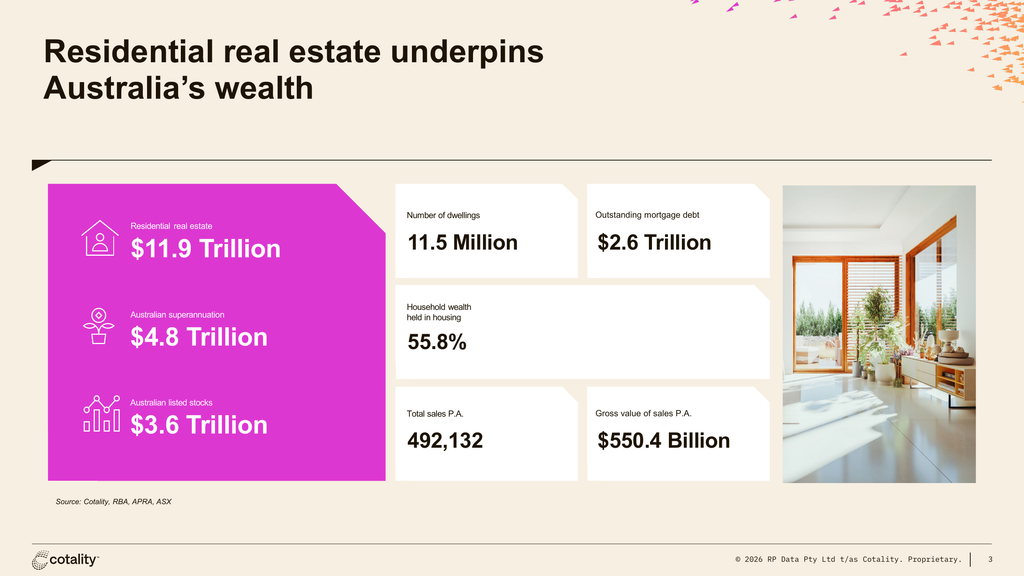
Most people reading this are not buying or selling this month. You are sitting tight and watching your repayments rise. With housing making up 55.8% of household wealth, according to Cotality, a falling market can feel heavy even if you have no plans to move.
For many households, a conversation with your lender or broker may be the most useful thing you do this quarter. In September, shorter-term fixed rates for owner-occupiers sat at 6.36%, above the average variable rate of 6.22%, which is the reverse of last year. So it may be worth reviewing your current rate and making sure your offset account is working for you before rushing to fix. Everyone’s situation is different, so get advice that fits yours.
What I Would Be Thinking About as a Seller
Pricing strategy matters, and good advice on where your price sits today matters just as much. It is easy to say a similar property sold for a certain price twelve months ago. That price is unlikely to be relevant now. What sold in the last month or two is the data that counts.
It is easy to discuss price with your neighbour, a friend or an agent. But the figures that really matter are what buyers come in with: their feedback, and the written offers they actually put on the table. Choose a strategy that gets you that feedback from the market: Auction, EOI, Offers Over or a Fixed Price: Which One Suits Your Home?
If you receive a reasonable offer, my suggestion is to negotiate on it seriously rather than dismiss it. In a market like this, a genuine buyer with a written offer is worth a lot. If you are unsure what your home is worth today, an updated opinion based on recent sales is a good starting point: How Do You Know What Your Home Is Really Worth?
What I Would Be Thinking About as a Buyer
Nationally, the vendor discount is the widest it has been since mid-2019. Buyers who understand values are in a good position to negotiate, and motivated sellers will often negotiate with you.
That doesn’t mean making bargain-basement offers. A lowball offer can put a vendor off and end the conversation altogether. Make a strong, well-researched offer and work with sellers who genuinely want to put a deal together.
Not every buyer holds the same hand, though. In September, before the November hike had flowed through, average variable rates on new loans were already 6.22% for owner-occupiers and 6.41% for investors. Cash buyers, downsizers and people moving with plenty of equity are less exposed to all of that, and right now it gives them a real edge.
On timing, the RBA’s November Statement on Monetary Policy noted that markets were pricing in around one and a half more rate rises by mid-next year. Forecasts like that don’t always play out. Remember 2020, when many predicted a crash and the market did the opposite. If you find the right property, I wouldn’t wait. Leave it a few months and the home that ticked every box could be gone. The market could shift, competition could return, and you would be back to square one.
The Quiet Story for Investors
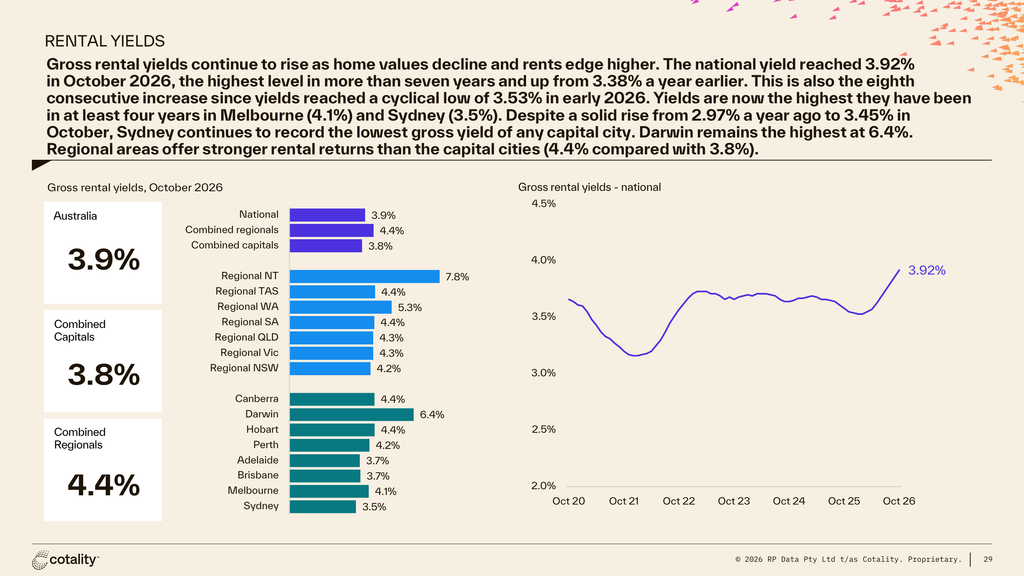
Rents are still rising while values ease, so yields have improved. The national gross yield is now 3.92%, the highest in more than seven years, and regional Queensland sits at 4.3%.
Higher borrowing costs take away some of that benefit, and rent growth is slowing. Even so, the numbers may start to look more interesting to investors who stepped back earlier in the year.
My Bottom Line
This market rewards good advice and a clear strategy more than almost anything else. Buyers who understand values can negotiate well, and sellers who price on current evidence are still getting results.
If you are in buying or selling mode and would like to talk it through, I would love to have a chat, whether that is over the phone, on Zoom or over a coffee!
Get in touch with us today and and let’s give you fantastic results that you deserve.
SUBSCRIBE to stay up to date with all the latest property insights and news.
Click Here to Subscribe
The Sunshine Coast Seller’s Guide to Choosing the Right Agent
Get Your Free Guide Here
Just Listed Your Home? Here’s What Happens Next (And How to Get Ready for a Great Result)
Download the Guide Here